Stronger, Safer, More Confident Dancers: Pre-Pointe Assessments & Dance-Specific Physiotherapy at PhysioXtra
From the ballet barre to the competition stage, dance demands far more than flexibility. Discover how dance-specific physiotherapy can help young dancers build strength, prevent injuries and perform with confidence.
Dance is a unique combination of athleticism and artistry, requiring exceptional strength, flexibility, balance, coordination and control. Whether it’s classical ballet, jazz, contemporary, calisthenics, gymnastics or competitive aerobics, dancers place significant physical demands on their bodies from a young age.
As training hours increase, technical skills become more challenging and young dancers progress through adolescence, these demands can become even greater.
At PhysioXtra Norwood, we understand that dancers are athletes, and their bodies deserve the same level of specialised care, assessment and injury management as any other sportsperson.
Our Senior Physiotherapist, Courtney Lehman, combines her extensive personal background in dance with her physiotherapy knowledge and experience to provide individualised, dance-specific assessments, injury rehabilitation and strength and conditioning programs.
Our goal? To help dancers stay strong, healthy and confident, so they can continue doing what they love for years to come.
What Is Dance-Specific Physiotherapy?
Dance-specific physiotherapy goes beyond simply treating an injury.
It involves understanding the unique movements, physical demands and technical requirements of different dance styles, and how these interact with a dancer’s strength, mobility, growth and development.
Unlike traditional sporting movements, dance frequently requires extreme joint positions, repetitive loading, sustained balance, controlled landings and precise movement patterns.
A dancer may have excellent flexibility but lack the muscular strength to control that movement. Another may demonstrate beautiful technique at the barre but struggle to maintain alignment during single-leg movements, jumps or fatigue.
Dance-specific physiotherapy helps identify these areas and provides targeted strategies to improve physical capacity and movement control.
At PhysioXtra, we focus on:
● Injury prevention and early intervention: Identifying strength deficits, movement compensations and training-related concerns before they become more significant problems.
● Dance-specific strength and conditioning: Building strength, endurance and stability to support the demands of dance.
● Mobility and flexibility: Developing functional mobility while ensuring dancers have the strength to control their available range.
● Movement and technique assessment: Assessing alignment, balance, turnout, jumping and landing mechanics.
● Injury rehabilitation and return to dance: Guiding dancers through a progressive, individualised return to training, performance and competition.
● Adolescent dancer health: Supporting young athletes through periods of growth, physical development and changing training demands.
Pre-Pointe Assessments: Is Your Dancer Ready for Pointe Shoes?
For many young ballet dancers, progressing onto pointe is an incredibly exciting milestone.
However, pointe work also introduces significant new demands on the feet, ankles, calves, knees, hips and trunk.
Being ready for pointe is about much more than age, years of ballet training or how flexible a dancer’s feet appear.
A pre-pointe assessment is a comprehensive physiotherapy assessment designed to evaluate whether a dancer has developed the physical strength, mobility, balance, control and movement capacity required to begin progressing towards pointe work.
At PhysioXtra Norwood, our pre-pointe assessments help identify individual strengths, areas requiring further development and any physical factors that may influence a dancer’s readiness.
What Does a Pre-Pointe Assessment Involve?
Our assessments consider the whole dancer, not just their feet and ankles.
1. Dance and Injury History
We begin by understanding the dancer’s background, including their age, training experience, weekly dance hours, other sporting commitments, previous injuries and goals.
This allows us to consider their overall training demands and physical development.
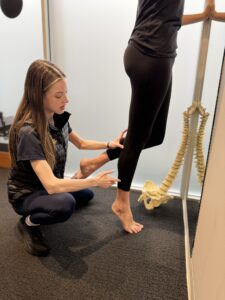
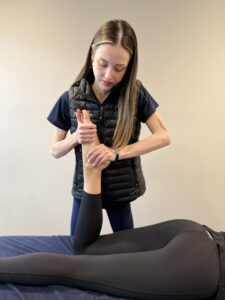
2. Foot and Ankle Strength and Mobility
Pointe work requires considerable strength, mobility and endurance throughout the foot and ankle.
We assess factors such as:
● Ankle mobility and available pointe range
● Big toe mobility and foot articulation
● Intrinsic foot muscle strength and arch control
● Calf strength and endurance
● Ankle stability and muscular control
● Any existing pain, irritation or injury concerns
3. Hip Strength, Turnout and Lower Limb Control
Effective turnout comes from the hips, rather than forcing rotation through the knees and feet.
We assess hip mobility and strength, active turnout control, pelvic stability and lower limb alignment during functional movements.
4. Core Strength, Balance and Postural Control
A strong and stable trunk provides the foundation for controlled movement throughout the body.
We assess balance, coordination, postural awareness and the dancer’s ability to maintain alignment during increasingly challenging tasks.
5. Dance-Specific Functional Testing
One of the most important components of the assessment is observing how the dancer moves.
This may include:
● Pliés and relevés
● Single-leg rises and balance
● Retiré and passé positions
● Tendus and turnout control
● Single-leg knee bends
● Jumping and landing mechanics
● Dance-specific strength and endurance testing
These movements help identify compensations or areas where a dancer may benefit from additional strength, control or technique development.
What Happens After the Assessment?
Every dancer receives individualised feedback and recommendations based on their assessment findings.
This may include a targeted home exercise program, advice regarding pointe readiness, suggested modifications to training or recommendations for further strength development.
Where appropriate, we can also communicate with parents and ballet teachers to ensure everyone is working towards the same goals.
Importantly, a pre-pointe assessment isn’t simply a pass-or-fail test.
Some dancers may be ready to begin a gradual introduction to pointe work, while others may benefit from a period of targeted strengthening and reassessment.
Our priority is to help each dancer progress at a pace that is appropriate for their individual physical development, in collaboration with their ballet teacher.
Why Is Physiotherapy So Important for Adolescent Dancers?
Adolescence is a particularly important stage in a young dancer’s development.
During this time, dancers often experience a significant increase in training hours, technical expectations, competition demands and physical workload.
At the same time, their bodies are undergoing considerable changes associated with growth and puberty.
Rapid growth can temporarily affect:
● Strength and muscular endurance
● Flexibility and mobility
● Balance and coordination
● Postural control
● Movement technique
● The body’s ability to tolerate repetitive loading
For example, a dancer who previously demonstrated excellent balance and control may suddenly struggle with certain movements during a growth spurt.
This doesn’t necessarily mean their technique is deteriorating. Their muscles and nervous system may simply need time and appropriate training to adapt to their changing body.
Growing bones and their developing growth regions can also be particularly sensitive to repetitive loading, making it important to recognise and manage symptoms early.
This is why adolescent dancers should not simply be treated as smaller versions of adult athletes.
At PhysioXtra, we consider growth, maturation, training load, recovery, nutrition and the physical demands of each dance discipline when developing an individualised management plan.
Our focus is on supporting long-term physical development, rather than simply managing symptoms in the short term.
Common Dance-Related Injuries We Can Help With
Dancers are exposed to a unique combination of repetitive movements, high-impact activities, extreme joint positions and demanding training schedules.
Some of the common presentations we assess and manage include:
Foot and Ankle Injuries
● Achilles tendinopathy
● Ankle sprains and instability
● Posterior ankle impingement
● Flexor hallucis longus (FHL) tendon irritation
● Foot and ankle pain associated with pointe work
● Bone stress injuries
Knee Injuries
● Patellofemoral pain
● Patellar tendon pain
● Growth-related knee pain, including Osgood-Schlatter disease and Sinding-Larsen-Johansson syndrome
● Knee pain associated with jumping, landing and repetitive loading
Hip and Pelvic Injuries
● Hip flexor pain
● Snapping hip symptoms
● Hip impingement-related pain
● Hip instability or reduced muscular control
● Growth-related hip and pelvic injuries
Back Injuries
● Lower back pain associated with repeated extension and rotation
● Lumbar bone stress injuries
● Reduced lumbopelvic control
● Pain associated with high training loads or movement compensations
Early assessment can help identify the cause of symptoms, guide appropriate load modification and establish a structured rehabilitation plan.
Hypermobility in Dancers: Why Flexibility Isn’t Everything
Flexibility is often celebrated in the dance world, but greater flexibility doesn’t always mean better movement control.
Many dancers naturally have increased joint mobility, also known as hypermobility.
While this can be advantageous for achieving certain dance positions, some hypermobile dancers may find it more challenging to maintain stability, control joint alignment or manage repetitive loading.
For example, a dancer may have excellent hip turnout or knee extension but lack the muscular strength required to control these positions consistently.
Rather than simply encouraging greater flexibility, we focus on developing:
● Muscular strength and endurance
● Joint stability and active control
● Balance and proprioception
● Safe movement strategies
● Strength throughout the dancer’s available range of motion
Our philosophy is simple: flexibility should be supported by strength.
We aim to help dancers use their mobility effectively and confidently, rather than relying on passive flexibility alone.
Dance-Specific Strength Training and Clinical Pilates
Strength training is one of the most valuable tools available to dancers, yet it is sometimes overlooked in favour of stretching and technique practice.
At PhysioXtra, we believe that developing strength is essential for supporting performance, managing physical demands and reducing modifiable injury risk factors.
Our dance-specific exercise programs may incorporate:
● Hip and gluteal strengthening
● Calf and foot intrinsic muscle conditioning
● Core and pelvic stability
● Single-leg balance and control
● Jumping and landing mechanics
● Turnout-specific strengthening
● Mobility and flexibility exercises
● Progressive functional strength and conditioning
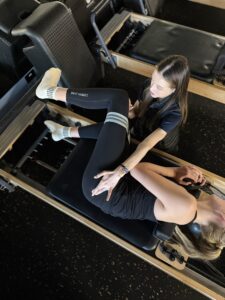
We also utilise Clinical Pilates, Reformer Pilates and mat-based exercise where appropriate to complement traditional strength training and dance rehabilitation.
These approaches can help dancers develop body awareness, movement precision, coordination and controlled strength.
Programs are tailored to the dancer’s age, experience, physical development, goals and current training demands.
Meet Courtney Lehman: A Physiotherapist Who Understands Dance
For Senior Physiotherapist Courtney Lehman, dance is more than just an area of clinical interest. It’s something she has experienced firsthand.
Courtney trained in dance for 15 years, with a strong focus on classical ballet, alongside experience in jazz, tap, contemporary dance and competitive gymnastics.
Her years of training have given her a firsthand appreciation of the discipline, dedication, physical demands and challenges involved in dance.
Alongside her physiotherapy career, Courtney has worked as a barre, Reformer Pilates and mat Pilates instructor for over six years, developing extensive practical experience in movement assessment, exercise prescription and strength-based rehabilitation.
Courtney has a particular interest in working with adolescent dancers, young athletes and hypermobile individuals, helping them build the physical foundations needed to participate confidently in their chosen activities.
She is also passionate about female athlete health and recognises the importance of supporting young dancers through growth, puberty and changing physical demands.
Her approach combines physiotherapy assessment, individualised exercise prescription, dance-specific movement analysis and education to help dancers understand their bodies and take an active role in their physical development.
Having experienced the demands of dance herself, Courtney understands that the goal is rarely just to become pain-free.
It’s about returning to the studio, regaining confidence, progressing technical skills and continuing to enjoy the activity you love.
How Can PhysioXtra Support Your Dancer or Dance School?
At PhysioXtra Norwood, we offer a range of services to support dancers, gymnasts, calisthenics participants and aerobics athletes.
Individual Pre-Pointe and Return-to-Pointe Assessments
Comprehensive assessments of strength, mobility, alignment, balance and functional readiness, with individualised recommendations and exercise programs.
Dance-Specific Physiotherapy and Injury Rehabilitation
Assessment and management of acute injuries, persistent pain and overuse conditions, with progressive rehabilitation tailored to the demands of the dancer’s discipline.
Injury Prevention and Movement Screening
Individual or group-based assessments designed to identify modifiable physical factors, movement compensations and areas requiring additional strength or control.
Dance-Specific Strength, Mobility and Pilates
Targeted exercise programs and opportunities for tailored strength, flexibility, mobility and Pilates sessions, including Reformer Pilates for appropriate age groups.
Education for Dance Schools, Coaches and Parents
We welcome opportunities to work with local dance schools, calisthenics clubs, gymnastics programs and aerobics teams.
This may include educational presentations, practical training sessions, injury-prevention workshops and advice regarding adolescent athlete development, training loads and recovery.
We also value communication with teachers, coaches and parents to support a collaborative approach to each dancer’s health and development.
Supporting Dancers at Every Stage
Whether your child is preparing for their first pair of pointe shoes, returning to dance after injury, navigating a growth spurt or training at a competitive level, having the right support can make a meaningful difference.
At PhysioXtra Norwood, our approach is about more than treating injuries.
We want to help dancers build the strength, confidence and physical resilience to continue doing what they love, both now and into the future.
Book a Pre-Pointe Assessment or Dance-Specific Physiotherapy Appointment
If you are a dancer, parent, teacher or coach looking for specialised physiotherapy support, we would love to hear from you.
Contact PhysioXtra Norwood to arrange an appointment with Senior Physiotherapist Courtney Lehman or discuss how we may be able to support your dance school or sporting program.
PhysioXtra Norwood
110 Magill Road, Norwood SA 5067
Phone: (08) 8132 1266
Email: clehman@physioxtra.com
Website: www.physioxtra.com
Strong dancers. Confident movement. A lifelong love of dance.